
Whisky Voices: Rachel MacNeill
This interview is part of my ongoing Whisky Voices Series, where I sit down with leading voices in the whisky world, from distillers and writers to ambassadors and innovators, to capture their unfiltered thoughts on heroes, villains, surprises, trends, and wishes.
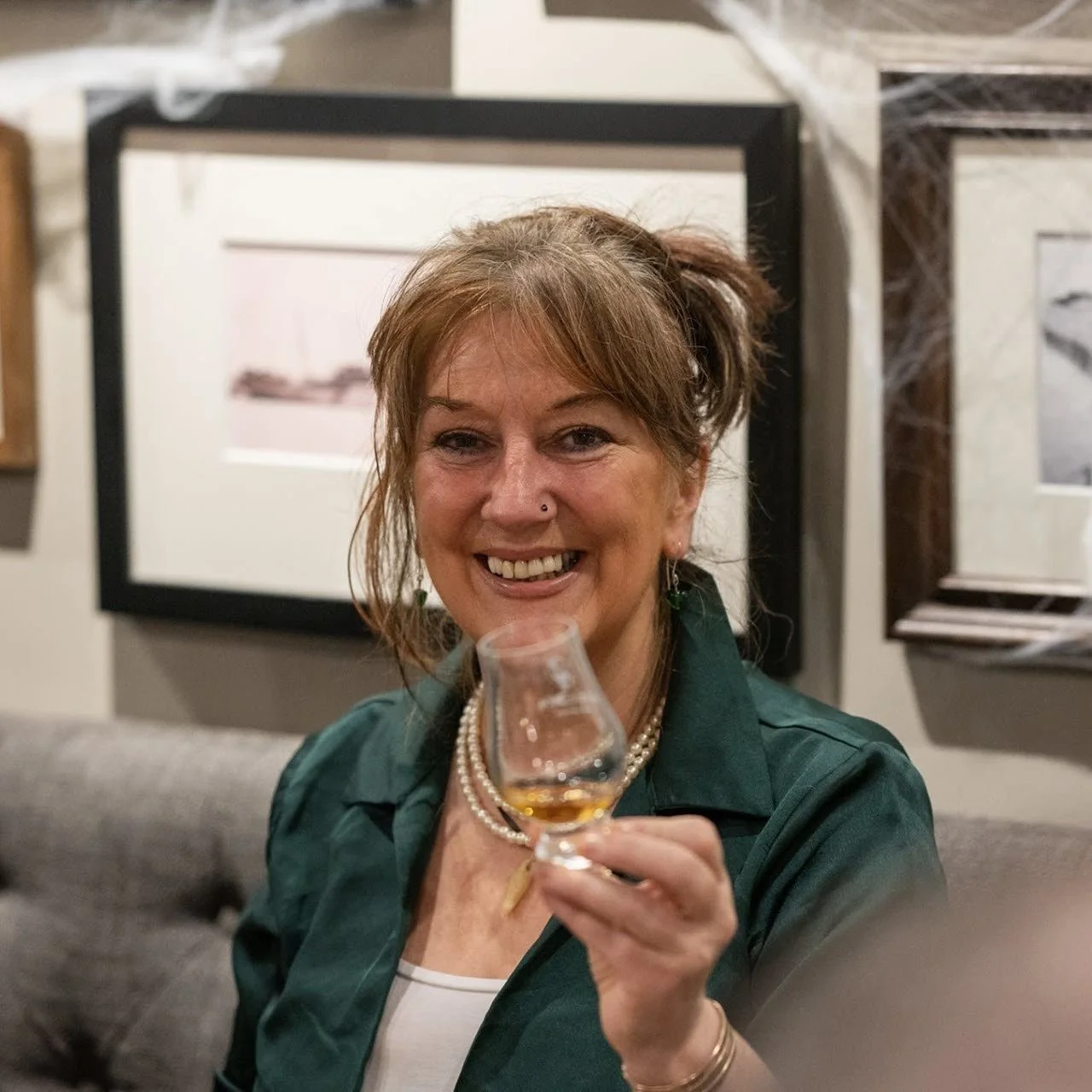
For this edition, I spoke with Rachel MacNeill; Ileach, whisky entrepreneur, founder of tour operator Wild & Magic Islay, and founder of the Islay Whisky Academy.
Rachel’s answers are expansive, deeply felt, and unapologetically values-driven; rooted in Islay, community, creativity, and an uncompromising respect for the land that makes whisky possible.
Whisky Hero
For Rachel, there is only one answer, and it comes with conviction, affection, and awe.
Her whisky hero is Jim McEwan.
“Jim is always welcoming and offers support to all, but doesn’t take fools seriously,” she said. “He gives generously, with humour, wit, and practicality. He’s the old-style successful Scottish man: not self-deprecating, knowing his worth, but never full of his own importance.”
What Rachel admires most is Jim’s authenticity.
“He doesn’t do things for attention or glory. He does them because he believes in them, because he’s motivated by creativity and the excitement of the endeavour. He likes people who are genuinely engaged by something authentic inside themselves, not just by making money, which is so boring!”
She describes Jim as someone with “one foot firmly in the traditions and community consciousness of Islay and Scotch whisky”, a way of being that changes how people work together.
“He regards people as friends rather than business partners. He loves the craic. This is about Scotland, Scotch, and community, not cold self-advancement.”
“Jim has style and character, and that magical fifth element. Some chefs have it. It’s a lightness of touch in living life. No amount of spreadsheets, evaluations, or market focus can give you that. You either have it or you don’t. And Mr McEwan has it.”
She points to the Ardnahoe Distillery Kinship Collection tasting, casks chosen by Jim, as the finest collective tasting she has ever experienced. “It was a joy of whiskies. Magical.”
Her nickname for Jim?
“The Boss! Like Bruce Springsteen. An authentic Whisky Rockstar.”
Whisky Villain
“Lack of respect and greed, manifesting as ‘big is better’, is the greatest whisky villain.” She speaks passionately about factory distilleries, vast warehousing, excessive peat extraction, and expansion driven purely by economics.
“Greed wants to build huge undertakings totally out of context with land and community. When respect is absent, all decisions are made on economics alone.”
“When building nuclear power plants, impacts are measured seven generations ahead. In whisky, the negative baseline isn’t even considered for the first generation.”
For Rachel, the problem begins when production is forced to fit an economic vision, rather than emerging from place and environment.
“We must start at the core, the land and the environment, and then work outward. When we start with the end product and work backwards, there is no reciprocity. That lack of respect is the true villain.”
Whisky Surprise
Independent distilleries, she observes, are flourishing during what many describe as an industry downturn.
“This is a positive aspect of the crumbling we’re seeing. Big companies rested on their laurels, forgetting why success existed in the first place.”
She notes how lockdown sales during the pandemic masked the importance of human connection.
“Online sales worked because of emotional bonds built over years. But when engagement stopped, tours cancelled, festivals skipped, emails unanswered, the big companies forgot that every purchase is connected to a living person with a heart.”
Meanwhile, independents doubled down on people. She points to figures like Billy Walker, signing bottles in shops; Kilchoman Distillery, with Anthony Wills building bonds face-to-face; Alasdair Day, maintaining strong personal engagement; and Ardnahoe, learning from Kilchoman and building warmer connections.
“Connection is the only thing that sells. Status buyers are not loyal. Kinship buyers are. This is why independents are thriving. It’s part of the zeitgeist, and a beautiful, thirst-quenching surprise.”
Whisky Trend
Rachel sees a profound shift underway. “The rise of the single cask.”
Distilleries, she notes, are responding to the long-standing success of independent bottlers, but something deeper is happening.
“I believe the era of standardisation is over. Malt whisky is made from a living cereal. The idea that it should be uniform to serve global marketing is finished.”
Single casks allow distilleries to expand beyond rigid flavour profiles, to experiment, to return to older ways.
“You make the best whisky you can, and then you sell it. Creating whisky for the market is over. The ‘average consumer’ does not exist.”
She challenges demographic clichés outright.
“Students buy expensive whisky. People in big houses drink safe options. Women have fascinating whisky tastes that have barely been explored.”
For Rachel, single casks represent whisky as it should be.
“Different every time you meet it. Alive. Exciting. Re-invented with every bottling.”
Whisky Wish
“I wish for the whisky industry worldwide to start caring about the environment. Truly.”
She speaks of reciprocity, referencing Braiding Sweetgrass, and calls for awareness of where water comes from, how electricity is generated, how peat is treated, and who else lives there.
“Barley, water, trees; these are living beings, not commodities. Without plants, we would have bugger all whisky.”
She calls out greenwashing, urging real care for peat moss, animals, insects, birds, and plant life.
“Mother Earth gives us the gifts to make whisky. We do not make barley, water, wood, or copper, she does. We take these gifts, and we destroy as we create.”
Rachel’s wish is simple, and profound.
“That we relearn respect for Mother Earth.
She gives us the gifts to make whisky.”
Slàinte Mhath!
- Thomas