Visiting Balvenie Distillery
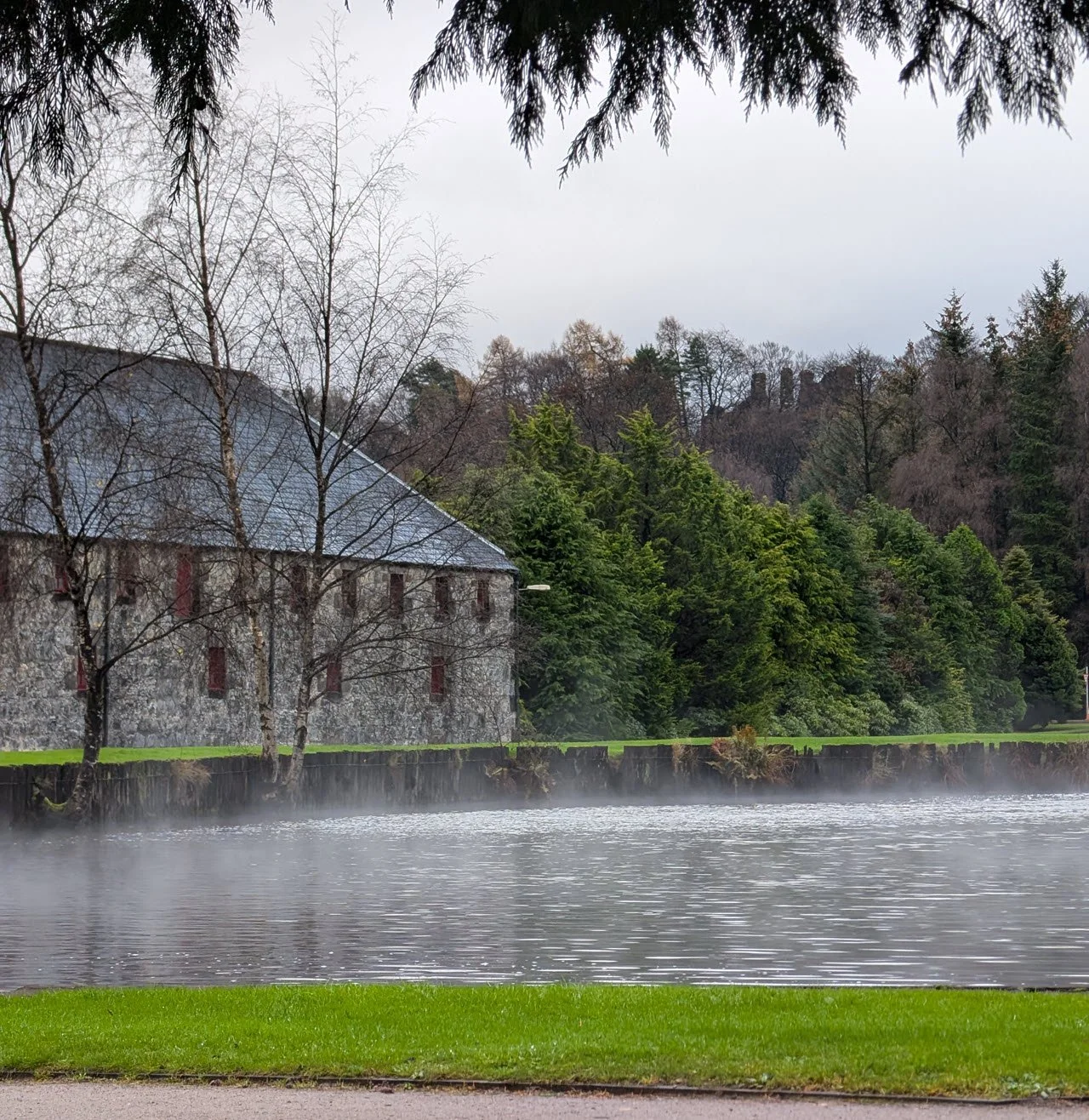
The whole area around the distilleries is very beautiful. (Photo: Whisky Saga)
Balvenie Distillery is located in Dufftown, in the heart of Speyside, Scotland. Founded in 1892 by William Grant, it remains one of the few distilleries in Scotland still under family ownership. Balvenie shares its vast estate with Glenfiddich and Kininvie, all owned by William Grant & Sons.
The three distilleries together occupy some 1,300 acres, with 43 warehouses holding approximately 1.4 million casks on-site and another 400,000 stored off-site.
How to get there
Dufftown lies about a three-hour drive north of either Edinburgh or Glasgow, and the route takes you through classic Speyside scenery, fields, glens, and forested hills that define this whisky region.
The history
Balvenie began production in 1892, and from the start has been defined by craftsmanship and self-sufficiency. The distillery still grows part of its own barley, malts on its traditional floor, and maintains its own cooperage, a rarity today.
Its malting floor, built in 1928, remains at the heart of operations. About 10 percent of Balvenie’s malt is produced in-house, a practice that keeps traditional skills alive and ensures a tangible connection to the grain that becomes their whisky.
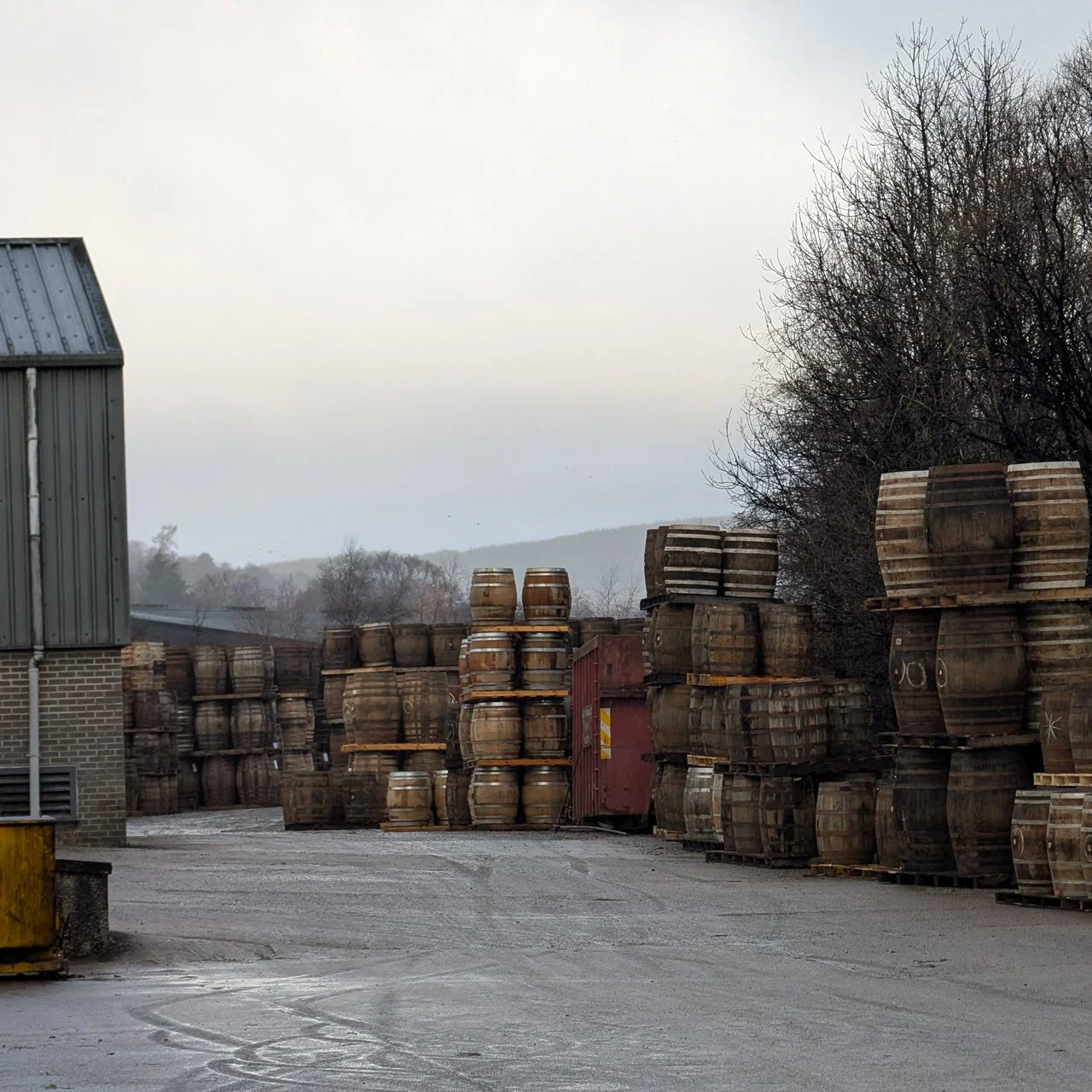
This is just outside the on-site cooperage. (Photo: Whisky Saga)
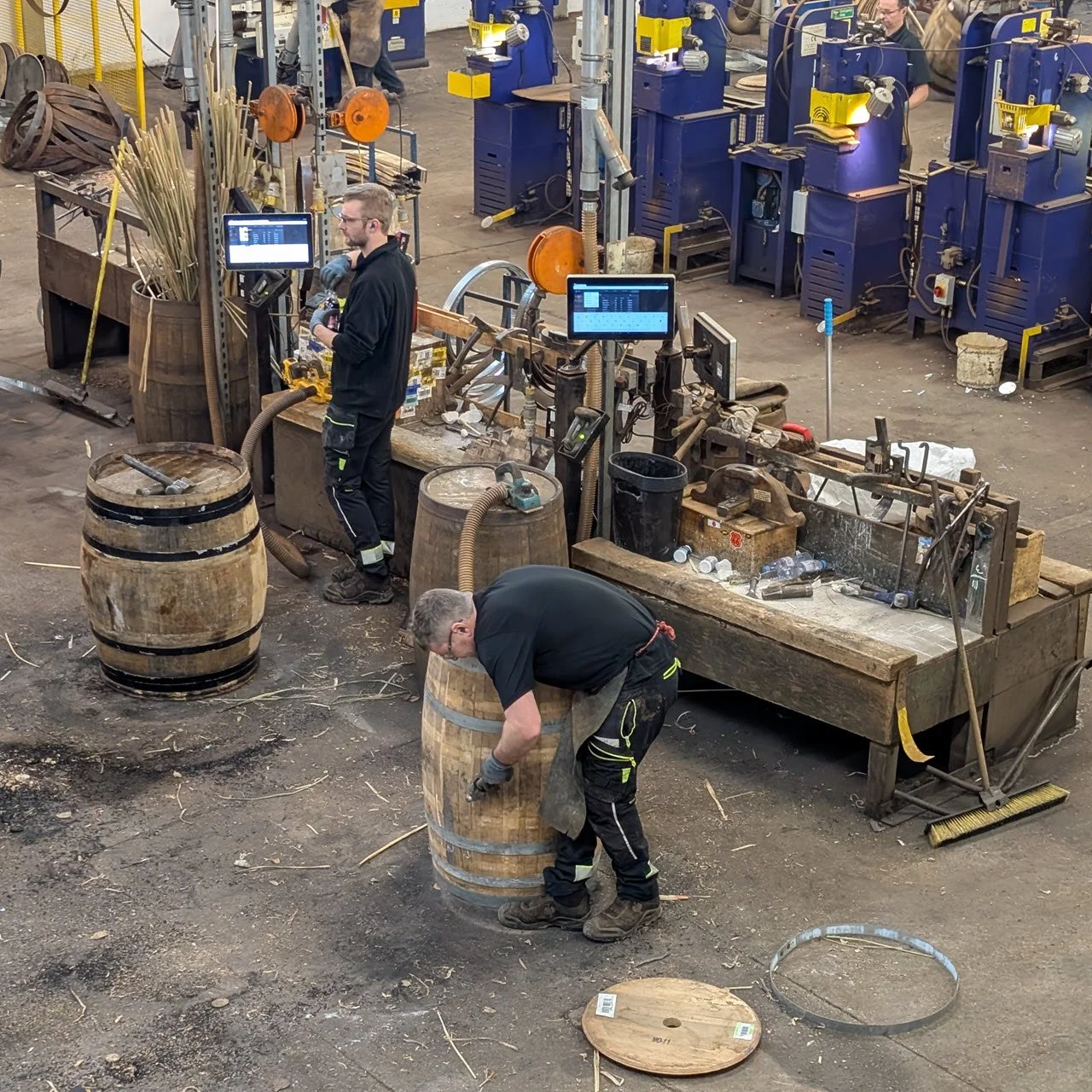
…and here we are inside the cooperage. (Photo: Whisky Saga)
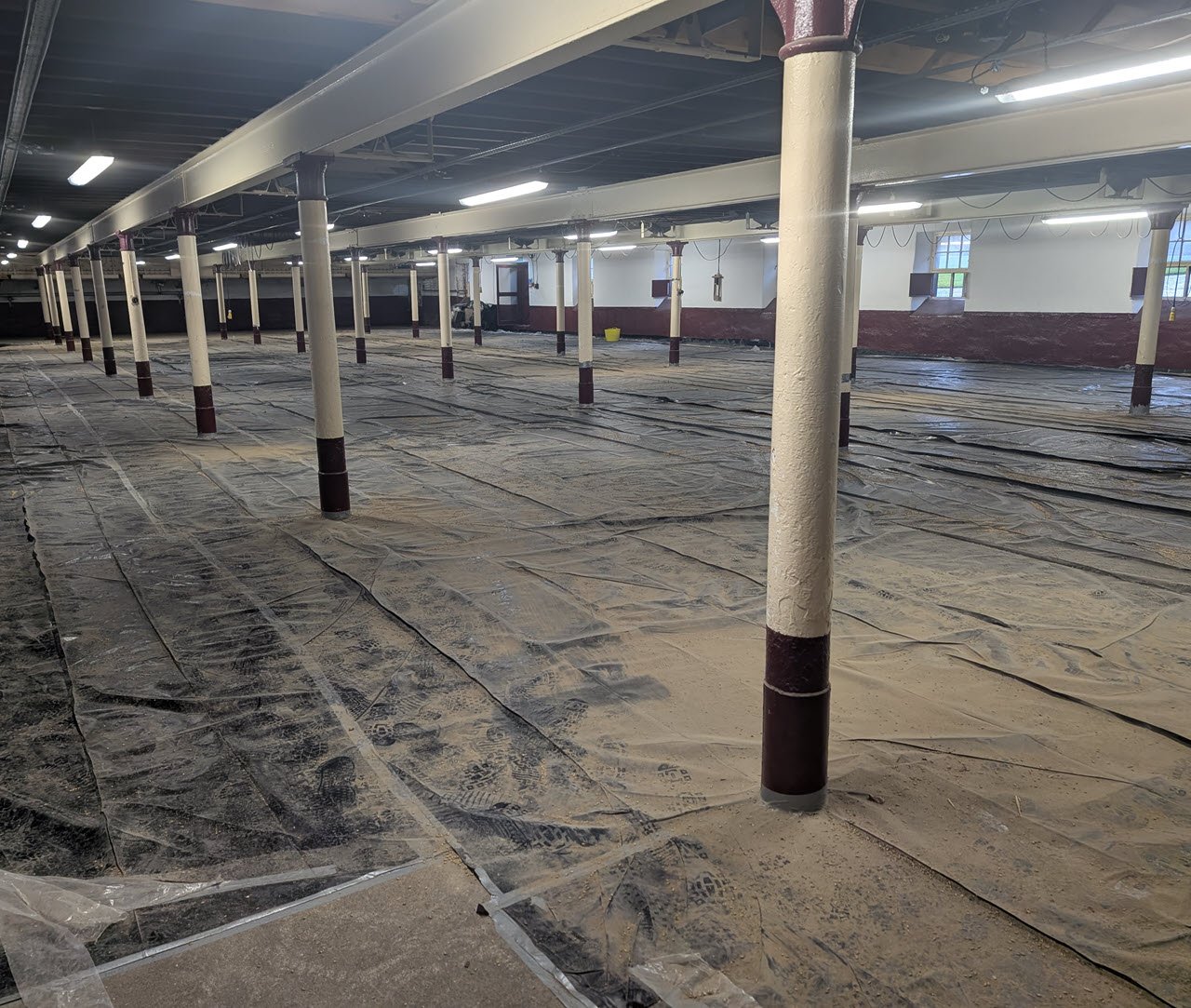
The malting floor was not in use when I was there. (Photo: Whisky Saga)
When we started the tour of the day our tour guide gave us a long and detailed presentation of the history. There are a few Glenfiddich facts here as well, as the two distilleries share a lot of their history (see my previous article about my visit to Glenfiddich here):
1839: William Grant born in Dufftown, Speyside.
1851: Leaves school at age 12 to work and support family; tutored privately in mathematics by Mr. McPherson.
1866: Becomes bookkeeper at Mortlach Distillery under George Cowie; first contact with whisky industry.
1867–1886: Works at Mortlach for 20 years, saving £1,000 (today ~£160,000) to fund his own distillery.
1886–1887: Builds Glenfiddich Distillery with family; equipment purchased from Elizabeth Cumming at Cardow.
Christmas Day 1887: First spirit distilled at Glenfiddich – the beginning of William Grant & Sons.
1892–1893: Constructs Balvenie Distillery beside Glenfiddich to protect the Robbie Dhu Burn water source.
1898: The Pattison crash; Grant family rescues whisky casks, leading to creation of their own blend.
1898–1900: Launch of Grant’s Stand Fast blended whisky – named after the Grant clan motto.
1909–1910: Charles Gordon expands exports to Asia and Australasia; 40 international markets established.
1920s–1930s: Industry downturn; only six distilleries active in Scotland, two of them owned by Grants.
1933: Repeal of US Prohibition (Volstead Act); Grants profit from ready stock and strong export links.
1950s: Post-war recovery; fourth-generation leaders Charlie & Sandy Grant-Gordon modernize branding.
1957: Launch of triangular Grant’s bottle designed by Hans Schleger – symbol of mid-century modernism.
1961: Glenfiddich Single Malt launched – first major single malt marketing campaign by an established brand.
1969: Glenfiddich opens Scotland’s first distillery visitor centre.
Early 1970s: Balvenie released as a single malt; distinctive green triangular bottle introduced.
1980s: Introduction of Balvenie Founder’s Reserve and Classic – pioneering cask finishing technique.
1992: Balvenie Centenary; DoubleWood 12 Year Old launched by Malt Master David Stewart MBE.
2000s–Present: Expansion of range (Caribbean Cask, PortWood, Tun 1509, etc.); floor maltings and cooperage remain in operation; family-owned heritage continues under William Grant & Sons.
My discovery
Walking onto the Balvenie estate feels like stepping back into whisky history. The air carries the scent of malted barley and peat smoke, and nearly everything is done with care and purpose.
We began at the maltings, where the process remains remarkably manual. Each batch steeps 8 tonnes of barley in water for 12 hours, rests 3 hours for airing, and repeats the cycle once more. The barley spends six days on the malting floor, tended with wooden shovels and turned by hand.
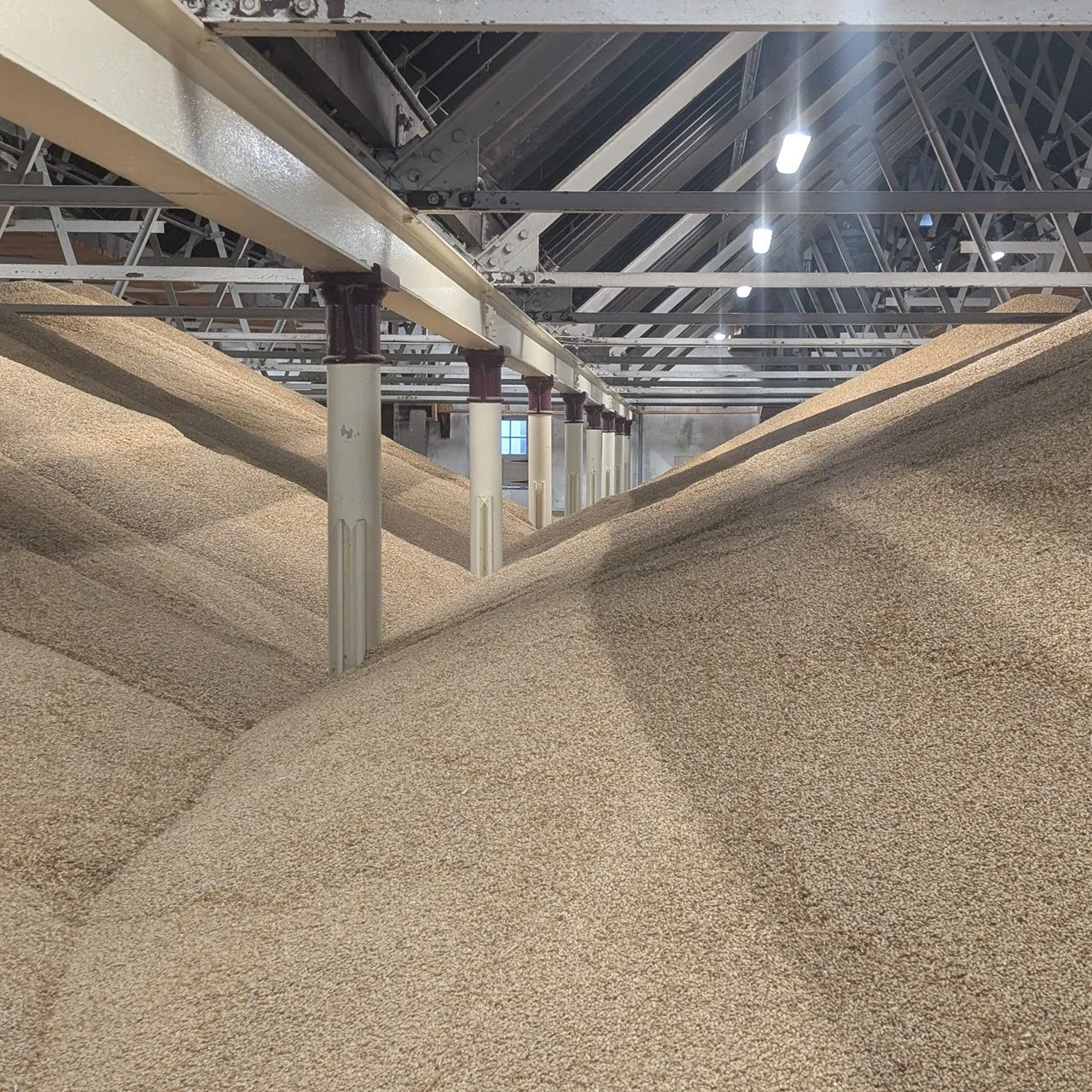
Soon this will all be whisky! (Photo: Whisky Saga)
The kiln, also dating from 1928, operates for 24 hours, starting at 55 °C and rising to 70 °C halfway through. For unpeated malt, they now use anthracite, while Aberdeenshire peat is burned on the right-hand kiln for smoky batches. Interestingly, Balvenie uses the top layer of peat for flavor and once used the bottom layer for energy, now replaced by cleaner anthracite fuel.
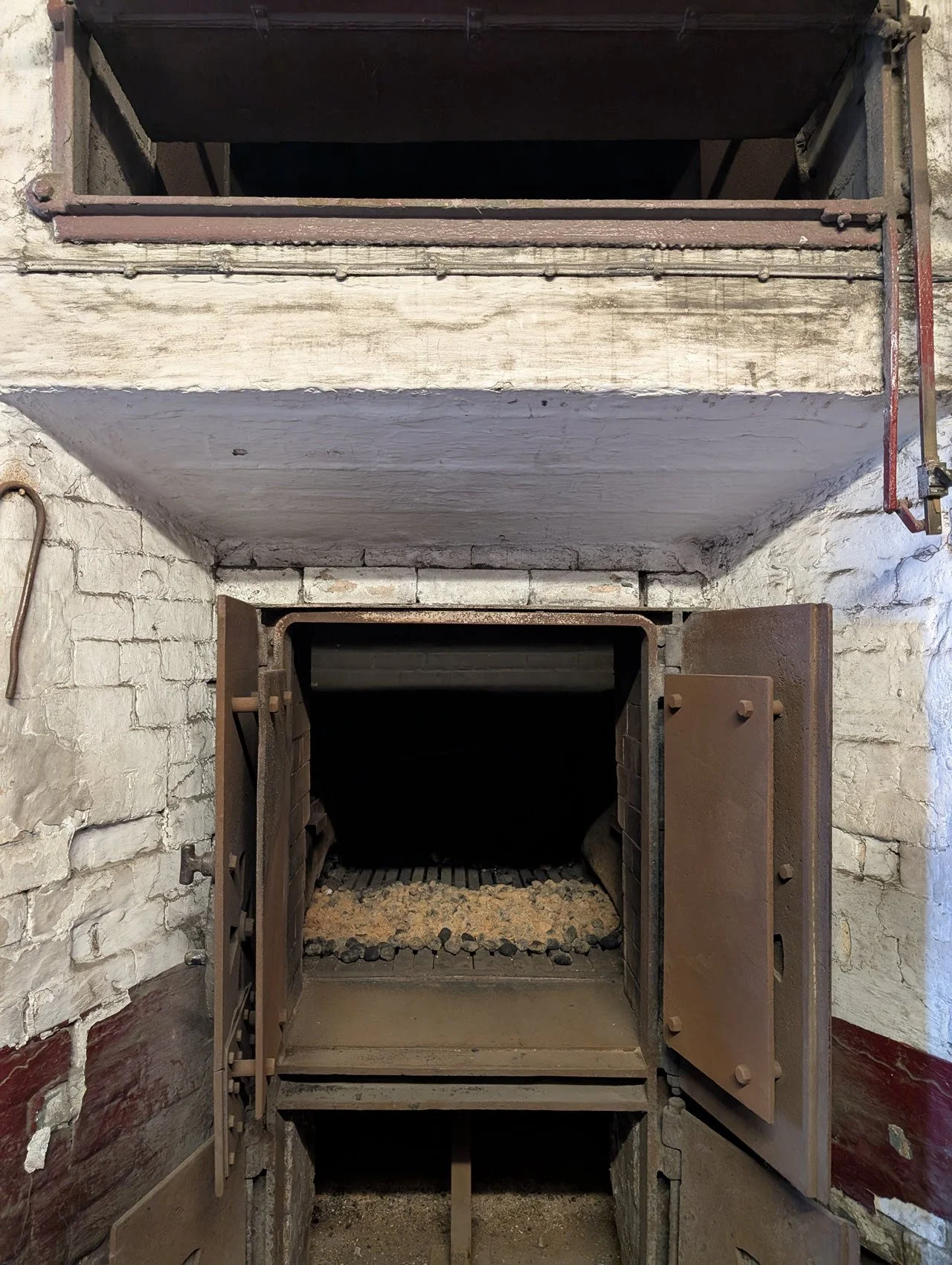
This kiln is used for the unpeated malt. (Photo: Whisky Saga)
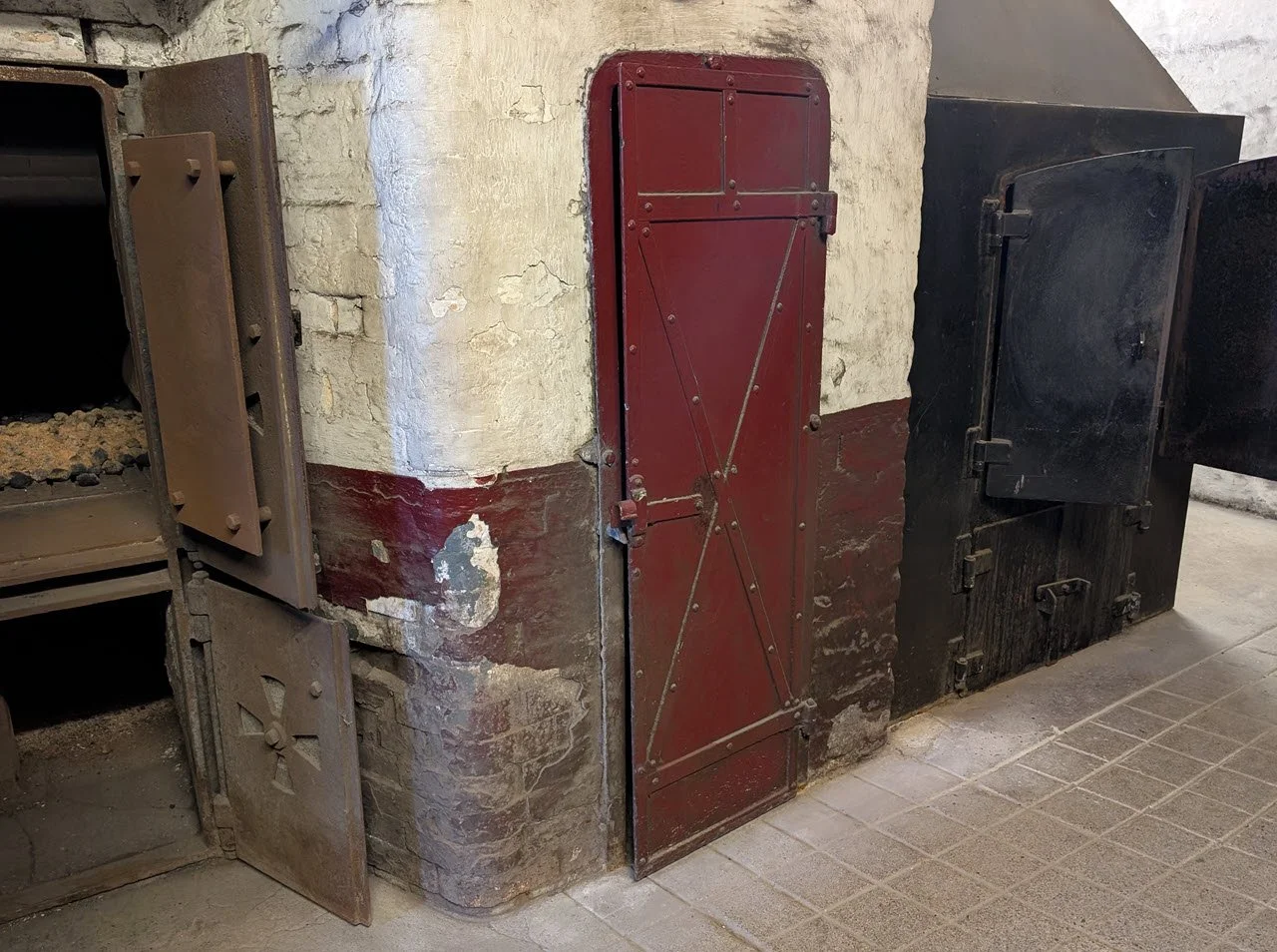
Peat is fed into the kiln on the right (the black door) when they do peated malt. (Photo: Whisky Saga)
Production
Mashing: 11.5 tonnes per mash; three waters at 65 °C, 75 °C, 85 °C over five hours.
Mash frequency: Six mashes per day.
Worts volume: 53,000 litres per batch.
Fermentation: 9 wooden + 6 steel washbacks (shared building with Kininvie).
68 hours fermentation, producing a wash of 9 % ABV.
Distillation:
Five wash stills and six spirit stills.
First distillation (5 hours) raises strength from 9 % to 25 % ABV.
Second distillation (6 hours) is entirely manual, with 30 minutes foreshots, 4 hours heart cut from 74 % down to 64 % ABV.
Cask filling:
Spirit is filled at both 63.5 % and 68 % ABV.
Lower ABV extracts sweeter notes; higher ABV enhances spice and wood.
Roughly half of the casks are filled at each strength.
The result is a distillate that is both elegant and robust, unmistakably Balvenie, with its signature honeyed fruit and gentle spice.
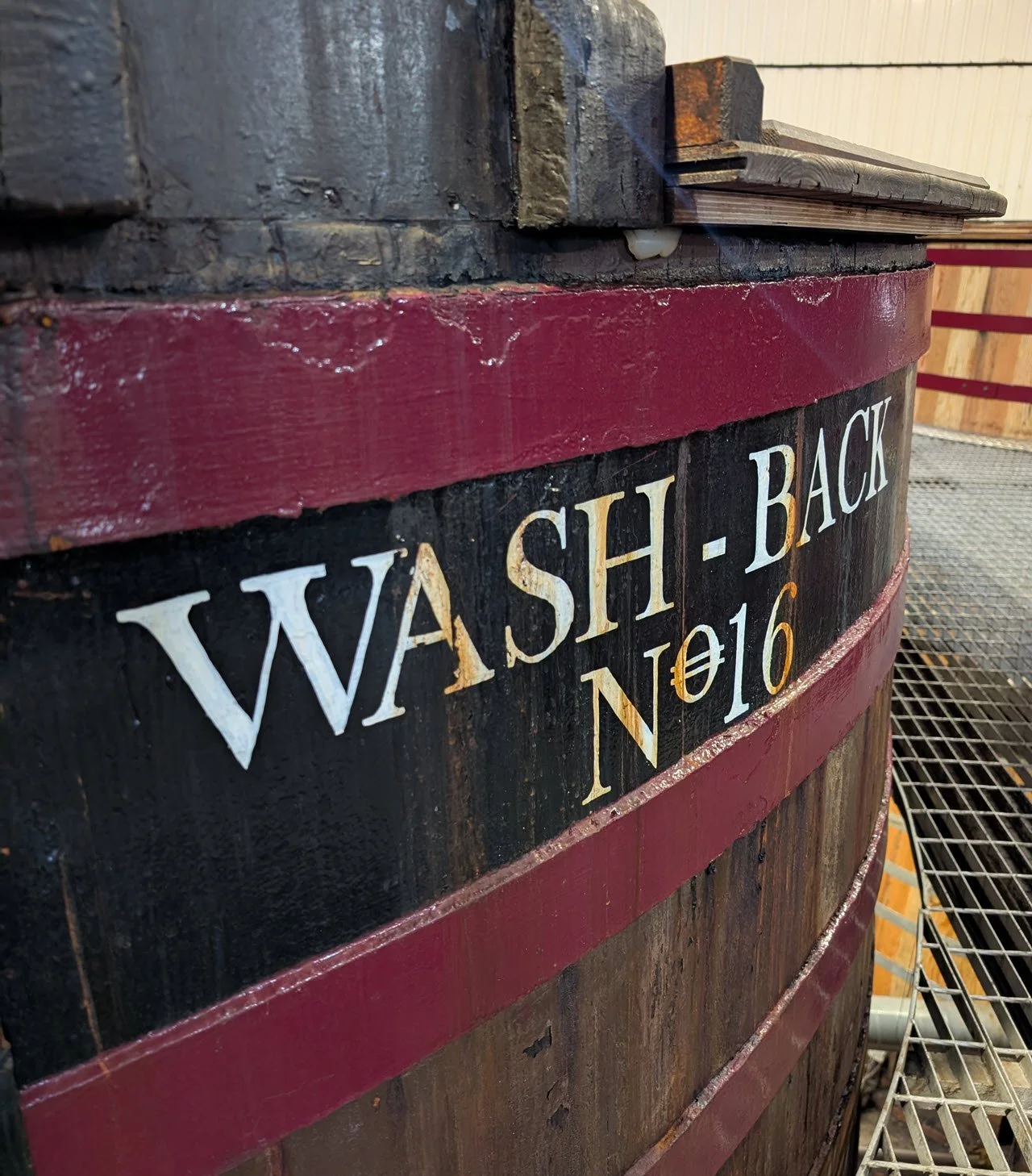
The label does give away what this is. (Photo: Whisky Saga)
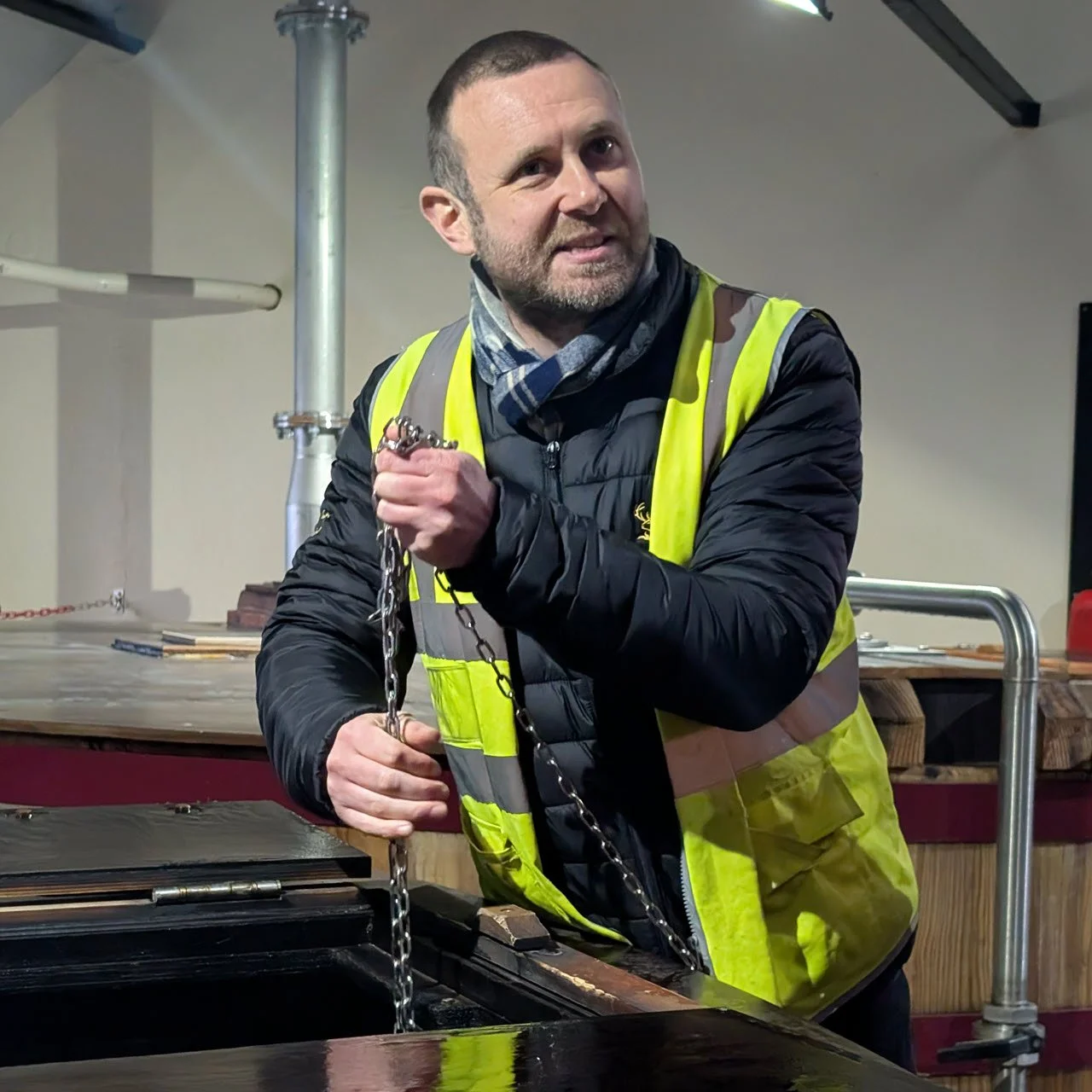
Our guide for the day. (Photo: Whisky Saga)
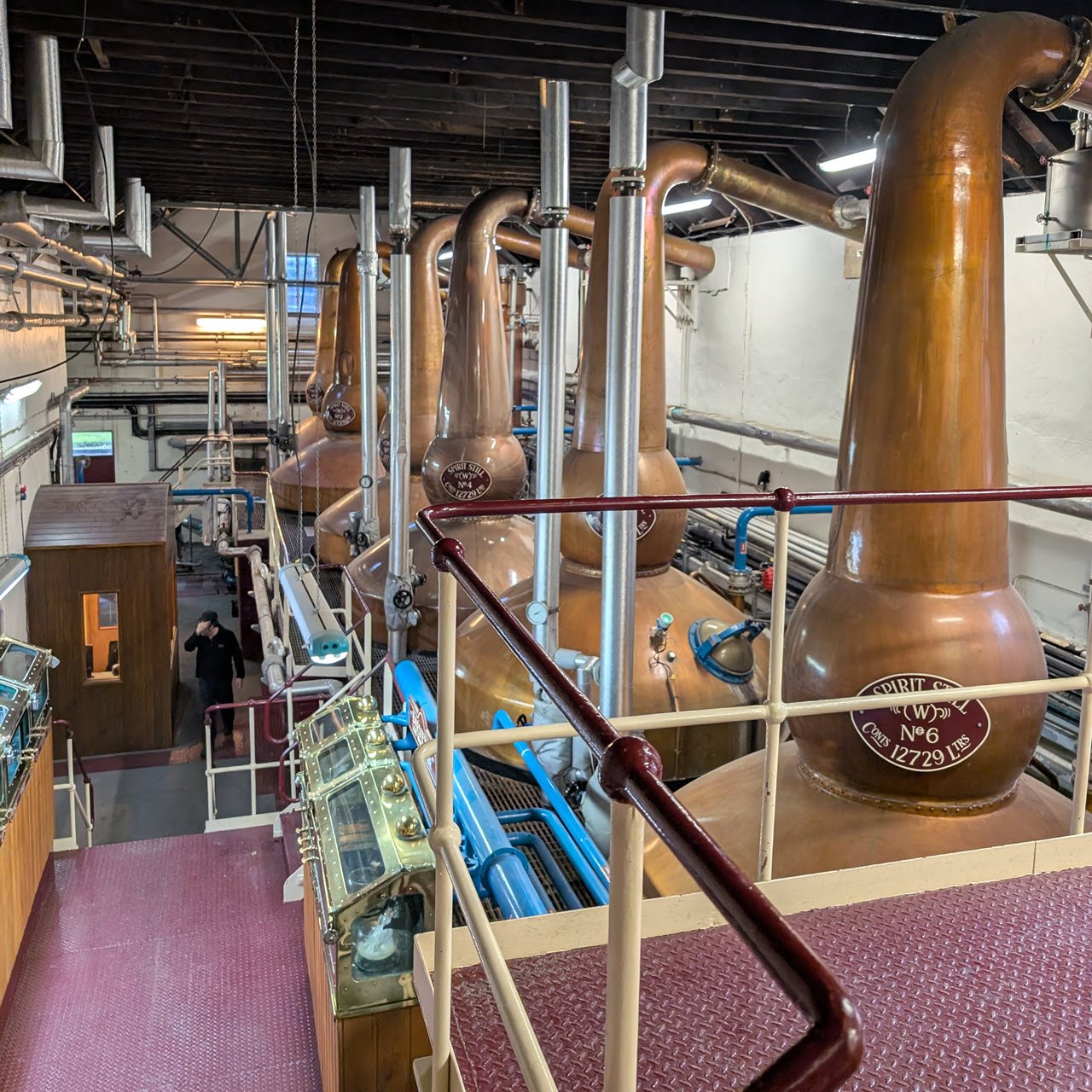
Look at all that beautiful copper. (Photo: Whisky Saga)
Tasting
Our visit concluded with a line-up that beautifully showcased the Balvenie style and its cask diversity:
Balvenie 12 YO American Oak, 43%
Lovely nose, light and clean. Score: 86/100Balvenie 16 YO French Oak, 47.6%
Light and fruity, gentle spice, then chocolate on the palate. Score: 87/100Balvenie 14 YO Curious Casks, 47.8%
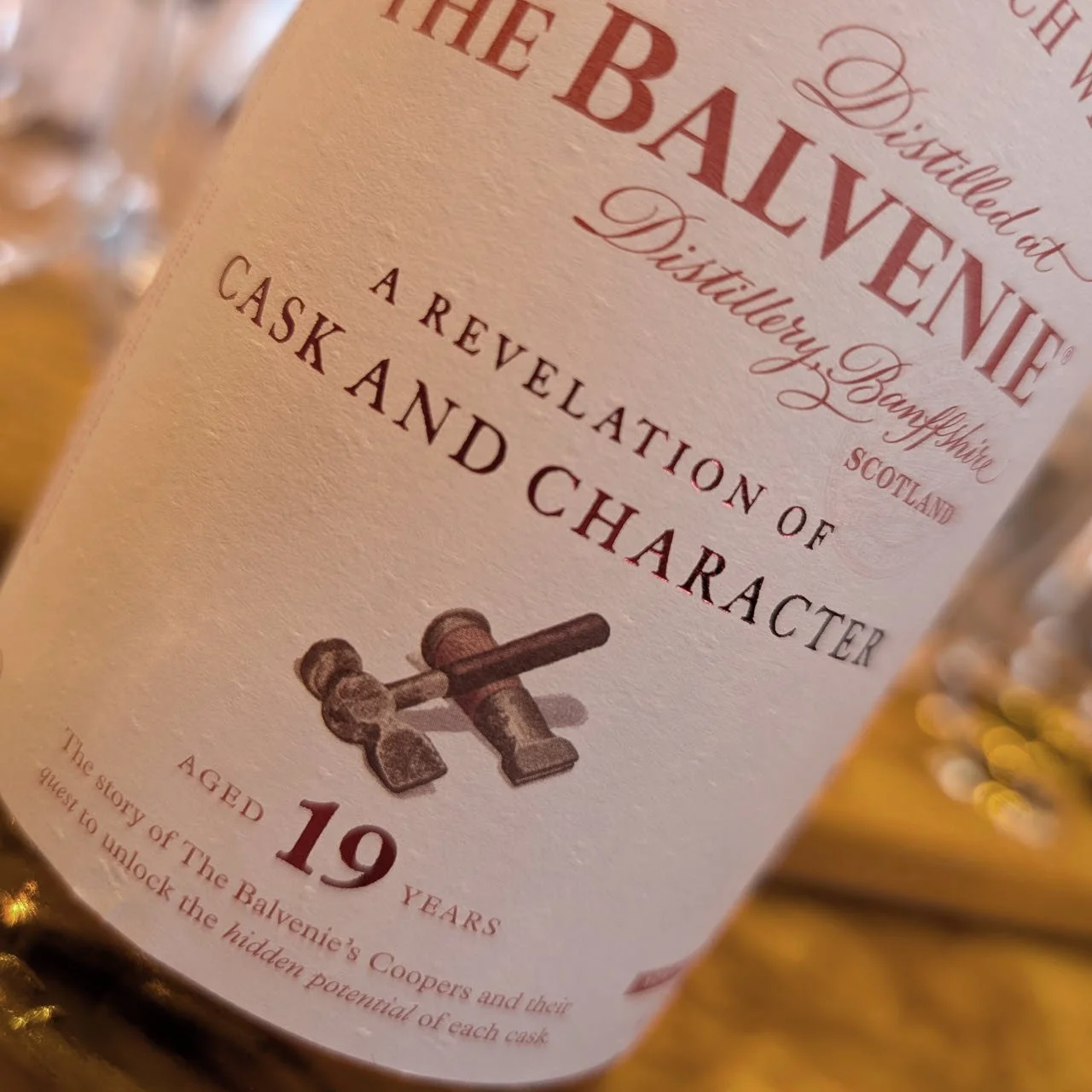
Comes across as slightly peated though it isn’t. Score: 87/100Balvenie 19 YO Casks and Character, 47.5%
Matured in Oloroso sherry casks. Lots of chocolate and dark berries. Score: 91/100Balvenie 25 YO Single Barrel (Cask 4210), 47.8%
Massive yet light and sweet fruitiness. Tropical, grilled pineapple. Big, creamy palate with a very long finish. Score: 92/100
Each dram reflected a different facet of the Balvenie character, craftsmanship, patience, and attention to wood influence. The 25 YO Single Barrel stood out as the highlight: mature yet fresh, brimming with tropical sweetness and depth.
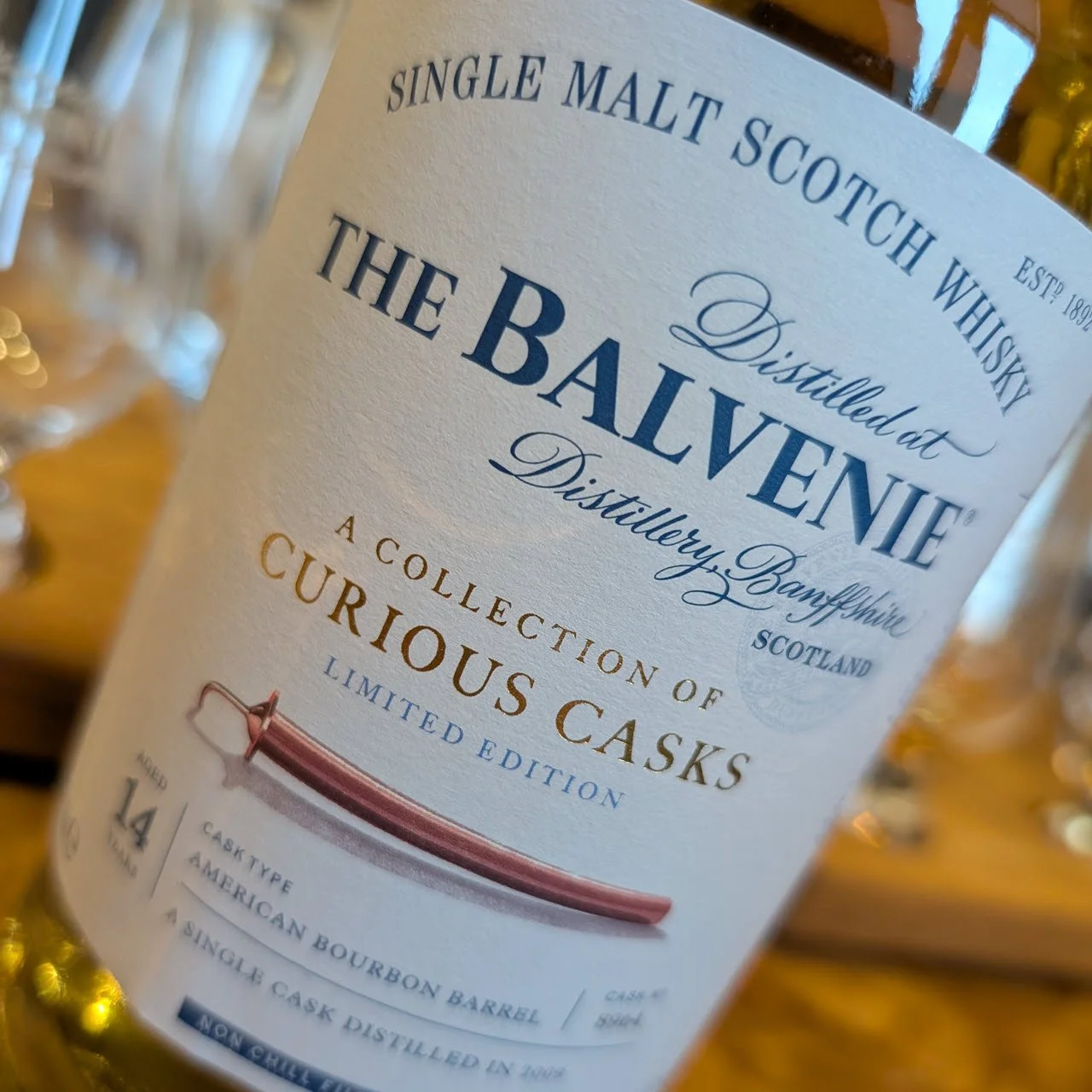
A great dram. (Photo: Whisky Saga)
An amazing dram. (Photo: Whisky Saga)

A stunning dram. (Photo: Whisky Saga)
Final thoughts
Balvenie offers a whisky experience rooted in authenticity. From the working malting floor and traditional kiln to the hand-made cuts in the still house, every detail reinforces its reputation for craftsmanship. The visit was both educational and inspiring. A deep dive into the making of one of Speyside’s most characterful single malts.
Slàinte!
– Thomas

Old bottles on display. (Photo: Whisky Saga)
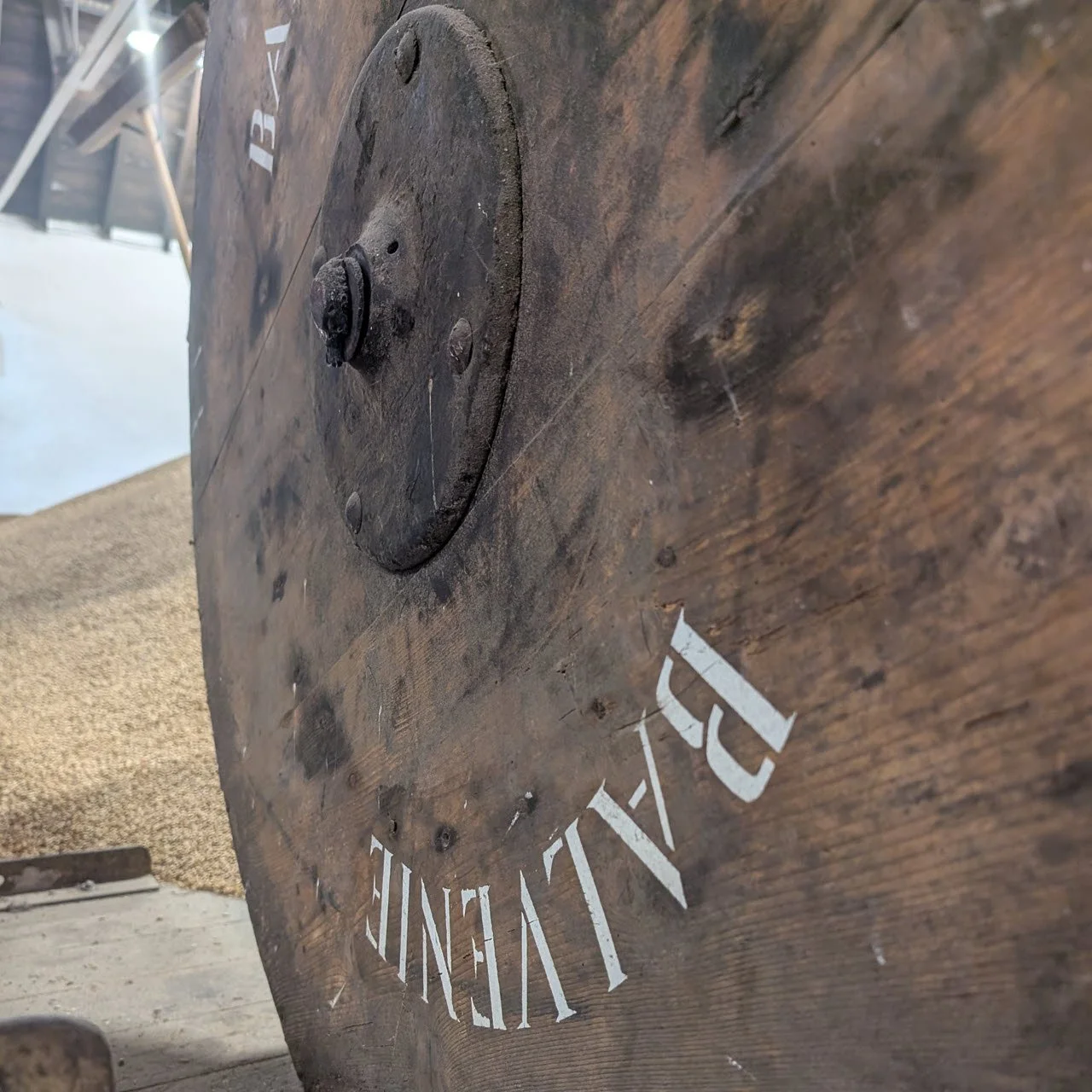
I like taking pictures. (Photo: Whisky Saga)
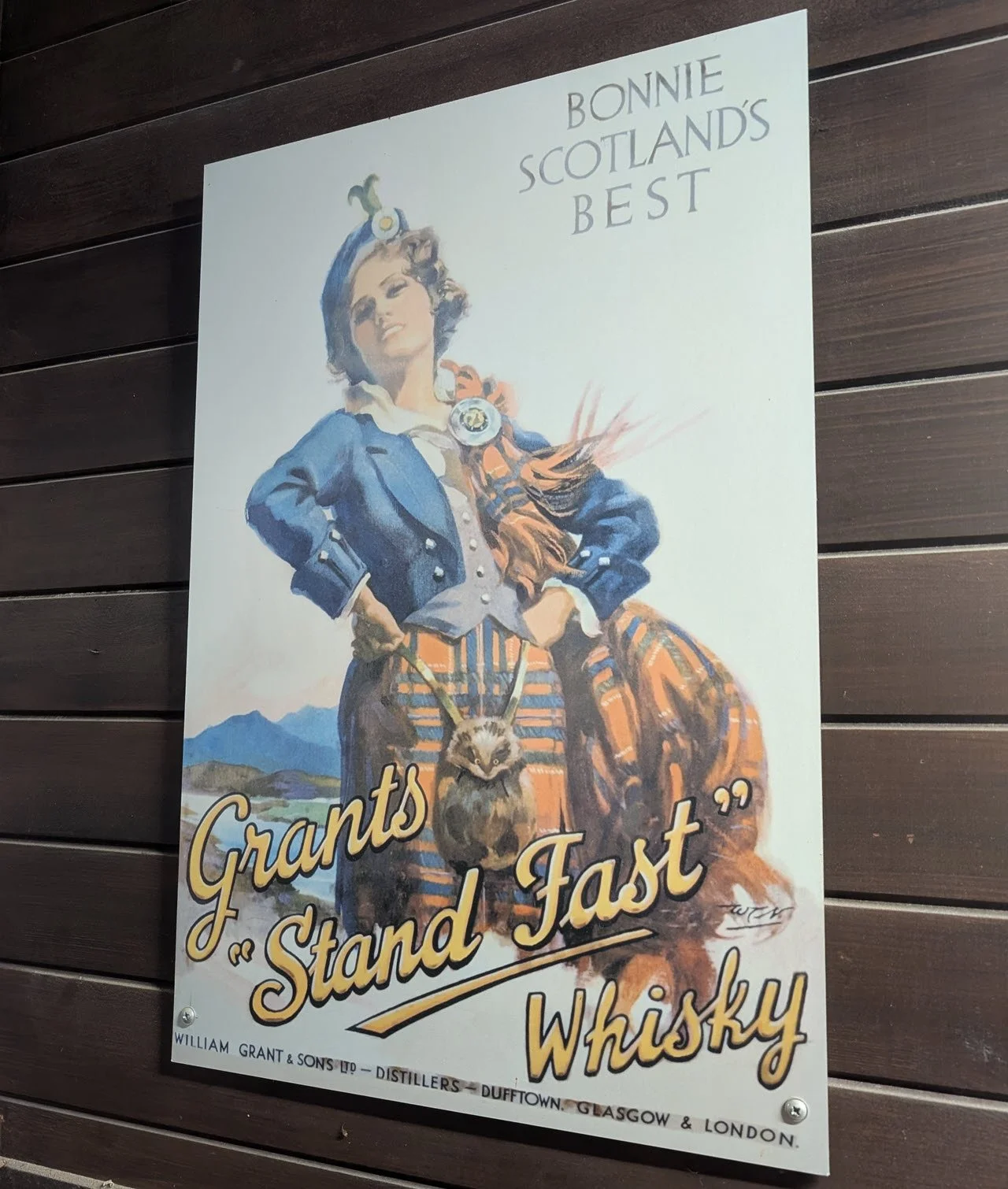
Feeling nostalgic. (Photo: Whisky Saga)
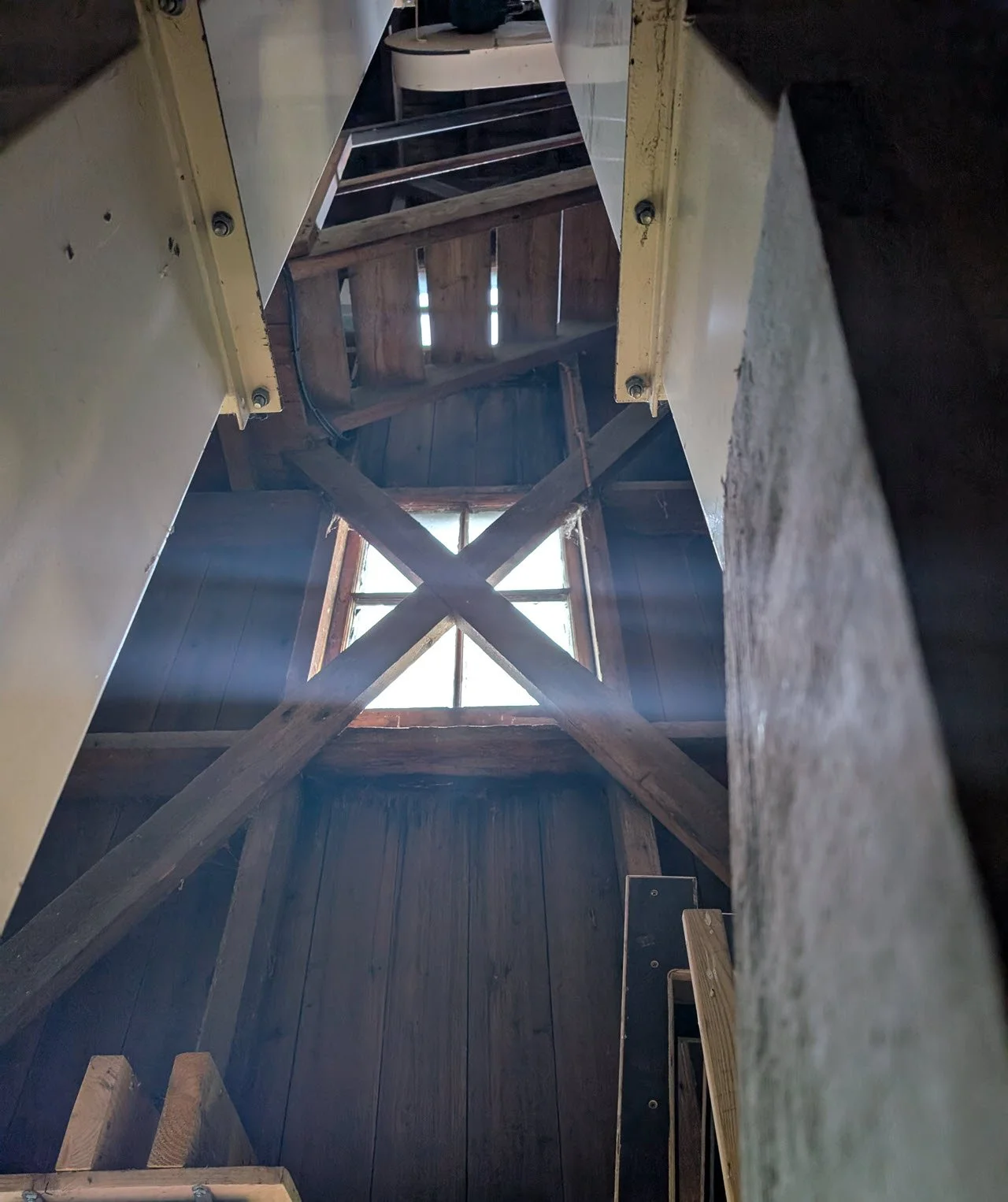
Curious details. (Photo: Whisky Saga)
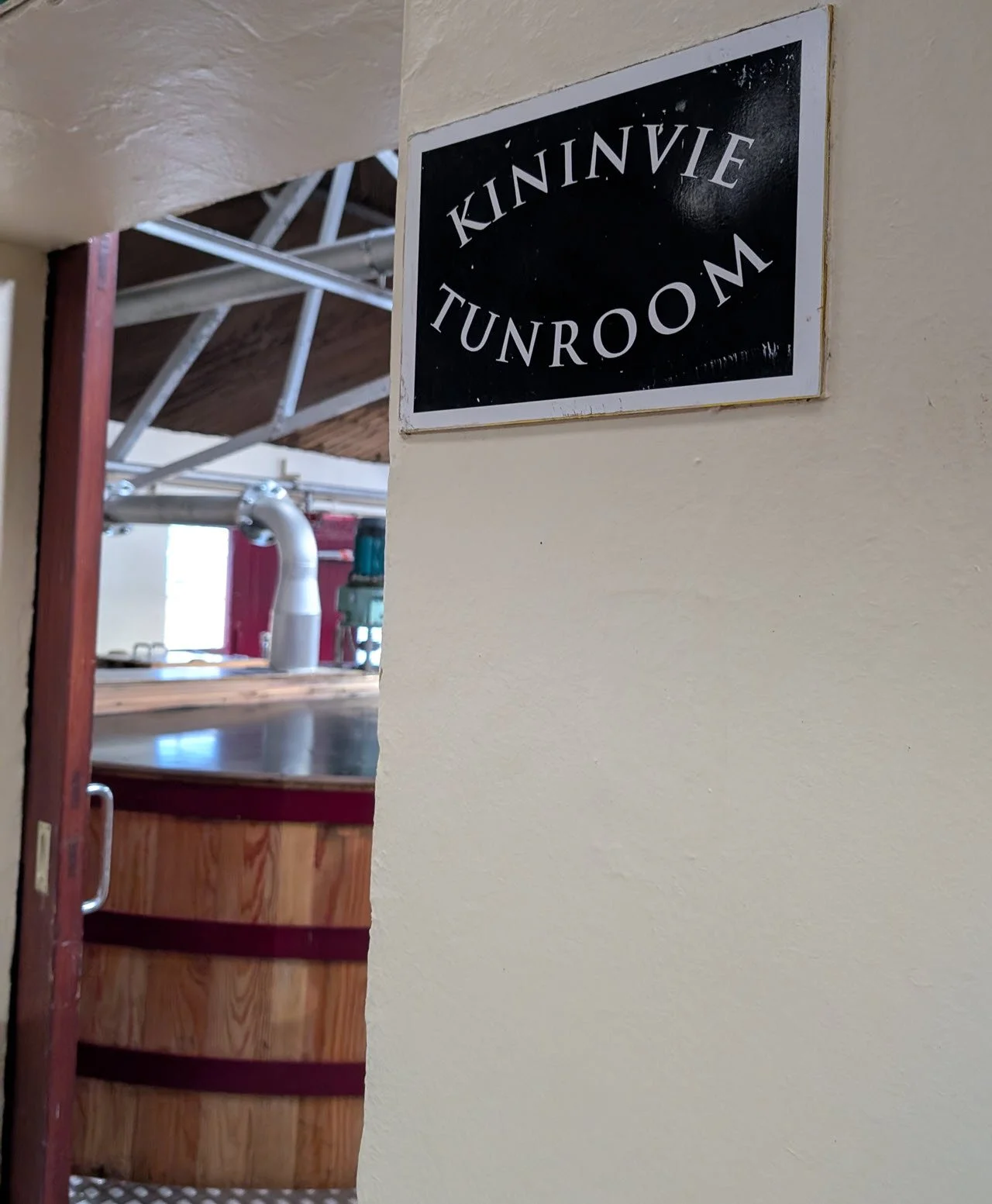
There’s a very close relation between Balvenie and Kininvie. (Photo: Whisky Saga)

More details from the still room. (Photo: Whisky Saga)
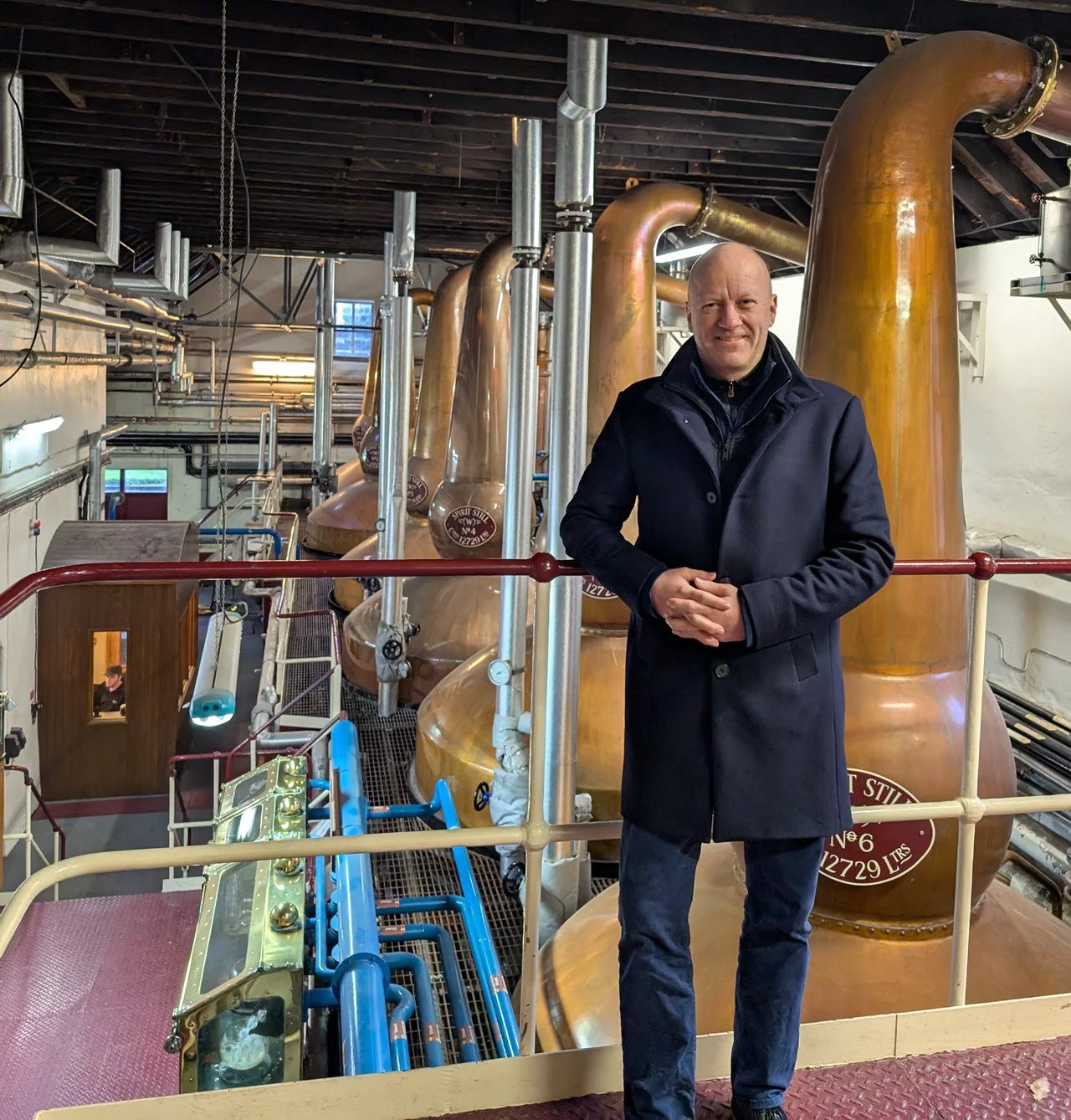
I look happy. I wonder why... (Photo: Whisky Saga)